
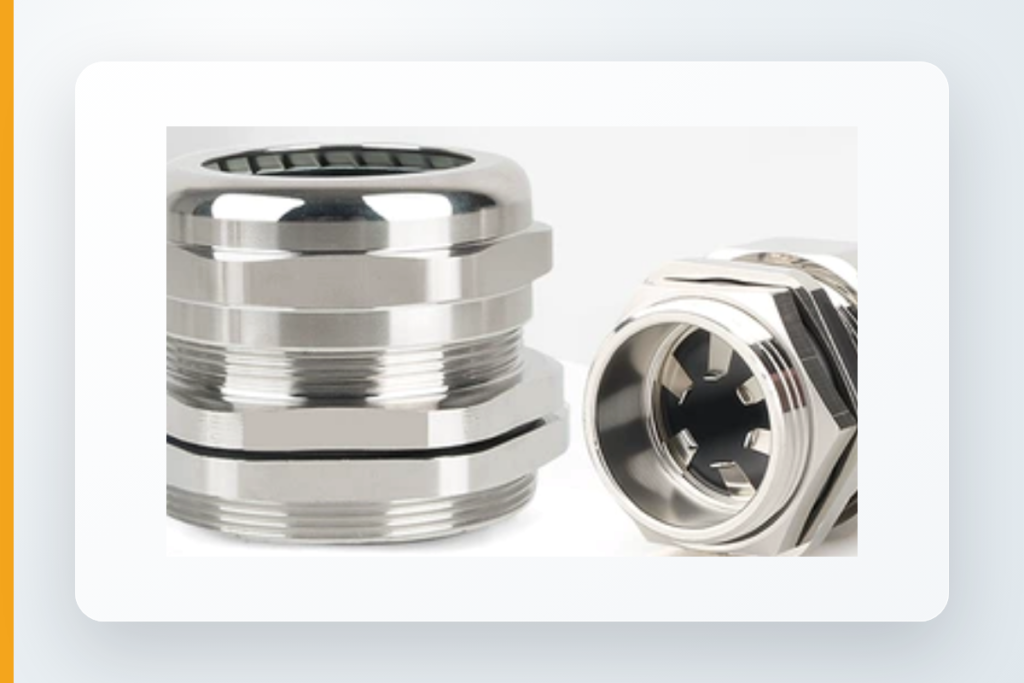
EMC Cable Gland vs Standard Cable Gland: Which One Should You Use?
For outdoor electrical enclosures, the right cable gland is not only about holding the cable. Buyers also need to consider sealing, strain relief, material, shielding continuity and the type of equipment being assembled.
Short Answer
Use an EMC brass cable gland when the cable is shielded and the enclosure design needs shielding continuity through the panel entry. Use a standard nylon cable gland when the main requirement is ordinary cable sealing, clamping and strain relief.
In many enclosure projects, both types are used together: EMC glands for shielded power, inverter, motor or control cables, and nylon glands for standard auxiliary cable entry.
What Is an EMC Cable Gland?
An EMC cable gland is designed for shielded cable installations. Besides sealing and strain relief, it helps connect the cable shield to the enclosure through the gland assembly. This is useful in cabinets where electromagnetic interference control is part of the equipment design.
Typical applications include inverter cabinets, automation panels, motor control systems, solar equipment and outdoor electrical enclosures with shielded control or power cables.
What Is a Standard Cable Gland?
A standard cable gland is used to hold and seal a cable as it passes through an enclosure wall. Nylon cable glands are common because they are cost-effective, lightweight and available in many metric and PG thread sizes.
They are widely used in junction boxes, control cabinets, lighting housings, machinery enclosures and distributor accessory kits.
Comparison Table
| Selection point | EMC brass cable gland | Standard nylon cable gland |
|---|---|---|
| Main role | Shielded cable entry, sealing and strain relief | Standard cable sealing and strain relief |
| Typical material | Nickel-plated brass | PA66 nylon |
| Best fit | Shielded power, inverter, motor and control cables | General cable entry and accessory kits |
| Buyer value | Supports shielding continuity in metal enclosures | Cost-effective and broadly used |
| Common applications | Solar inverters, automation panels, outdoor control cabinets | Electrical boxes, machinery housings, junction boxes |
When to Choose EMC Brass Cable Glands
- The cable has a shield or braid that needs to be connected through the enclosure entry.
- The cabinet uses motors, drives, inverters or other equipment where interference control matters.
- The buyer needs a stronger metal gland body for outdoor or industrial equipment.
- The project specification calls for shielded cable entry or EMC cable glands.
When to Choose Standard Nylon Cable Glands
- The cable is not shielded and only needs sealing and strain relief.
- The project is cost-sensitive or uses many cable entry points.
- The buyer needs multiple sizes for distributor stock or accessory kits.
- Blanking plugs, locknuts and reducers are being ordered together as supporting parts.
How to Send a Clear Inquiry
For a faster quotation, send the cable gland type, thread size, cable outer diameter range, material requirement, quantity and destination country. For EMC glands, also describe the shielded cable and shielding contact requirement if available.
Related Product Pages
Compare Cable Gland Options
Share your cable type, enclosure material, thread size and quantity. We will help match EMC brass glands, nylon glands or supporting accessories for your project.