
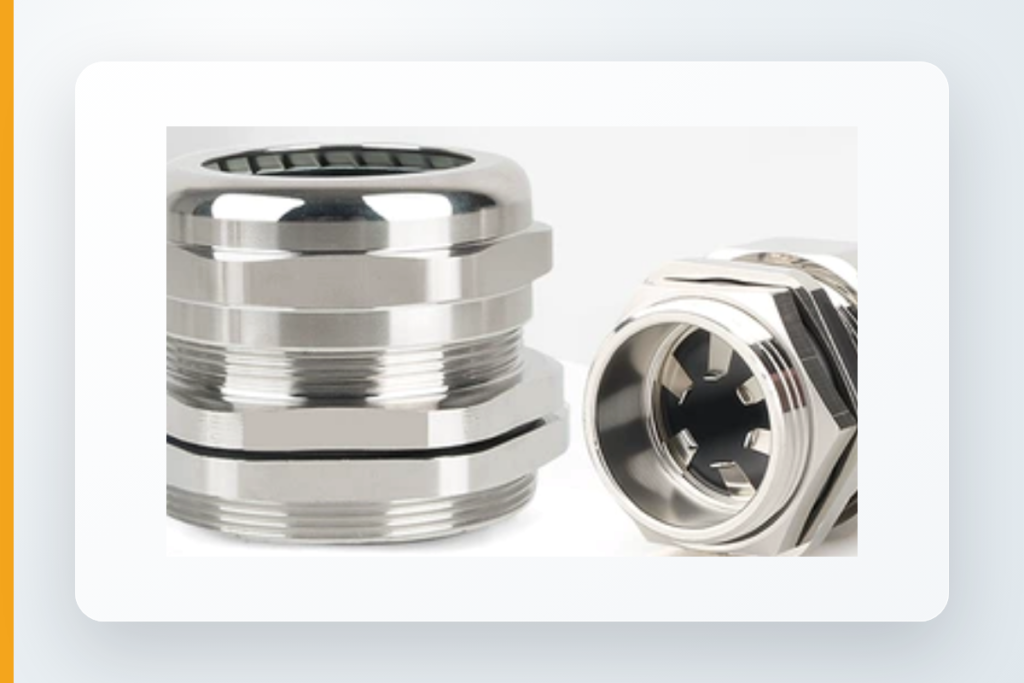
Cable Entry Solutions for Solar Inverter Enclosures
Solar inverter enclosures and combiner boxes need sealed cable entry, shielding continuity, pressure balance and compact wiring layouts. This guide helps buyers choose enclosure accessories for PV equipment projects.
Why Cable Entry Matters in Solar Inverter Enclosures
Solar inverter enclosures often work outdoors or in semi-outdoor electrical rooms. Cable entry points must support sealing, strain relief and organized routing for power, control and signal cables. In some designs, pressure balance and condensation reduction are also important.
A good accessory set can include EMC brass cable glands, standard nylon cable glands, multi-hole nylon cable glands and waterproof breather vent plugs.
Common Cable Entry Requirements
- Shielded cable entry for inverter, motor, communication or control cables.
- Sealed power cable entry for outdoor electrical cabinets.
- Multiple small cable routing for signal, sensor or communication lines.
- Pressure equalization to reduce seal stress and condensation risk.
- Supporting accessories such as locknuts, blanking plugs and reducers.
Recommended Product Directions
| PV enclosure need | Recommended accessory | Purpose |
|---|---|---|
| Shielded cable entry | EMC brass shielded cable gland | Supports shielding continuity and robust threaded cable entry. |
| General cable sealing | Standard nylon cable gland | Cost-effective cable clamping and strain relief for regular cable entry. |
| Several small control cables | Multi-hole nylon cable gland | Routes multiple small cables through one enclosure hole. |
| Pressure balance | Waterproof breather vent plug | Helps equalize pressure and manage condensation risk in sealed housings. |
| Unused panel holes | Blanking plugs and locknuts | Completes the enclosure accessory kit and supports sealed cabinet assembly. |
When to Use EMC Brass Cable Glands
EMC brass cable glands are useful when shielded cables pass through a metal enclosure wall and the buyer needs a conductive path through the entry point. In solar inverter projects, this may apply to shielded control cables, inverter-related wiring or other cables specified for EMC handling.
When to Use Breather Vent Plugs
Outdoor PV enclosures face heat, sunlight, rain and temperature changes. A breather vent plug helps the enclosure breathe while supporting water-resistant pressure equalization according to the selected vent structure.
When to Use Multi-hole Cable Glands
For communication lines, sensor wires or multiple small control cables, a multi-hole cable gland can reduce the number of panel holes and keep the wiring layout compact.
Inquiry Checklist for Solar Inverter Projects
- Enclosure type: inverter cabinet, combiner box or control box
- Cable type: shielded cable, power cable, sensor cable or communication cable
- Thread size and cable diameter range
- Need for EMC shielding, pressure balance or multi-hole inserts
- Accessory requirements: locknuts, O-rings, reducers and blanking plugs
- Quantity, destination country and document needs
Related Product Pages
Source Cable Entry Parts for PV Enclosures
Share your solar inverter or combiner box accessory requirements. We will help match cable glands, breather vents and supporting parts for your enclosure design.